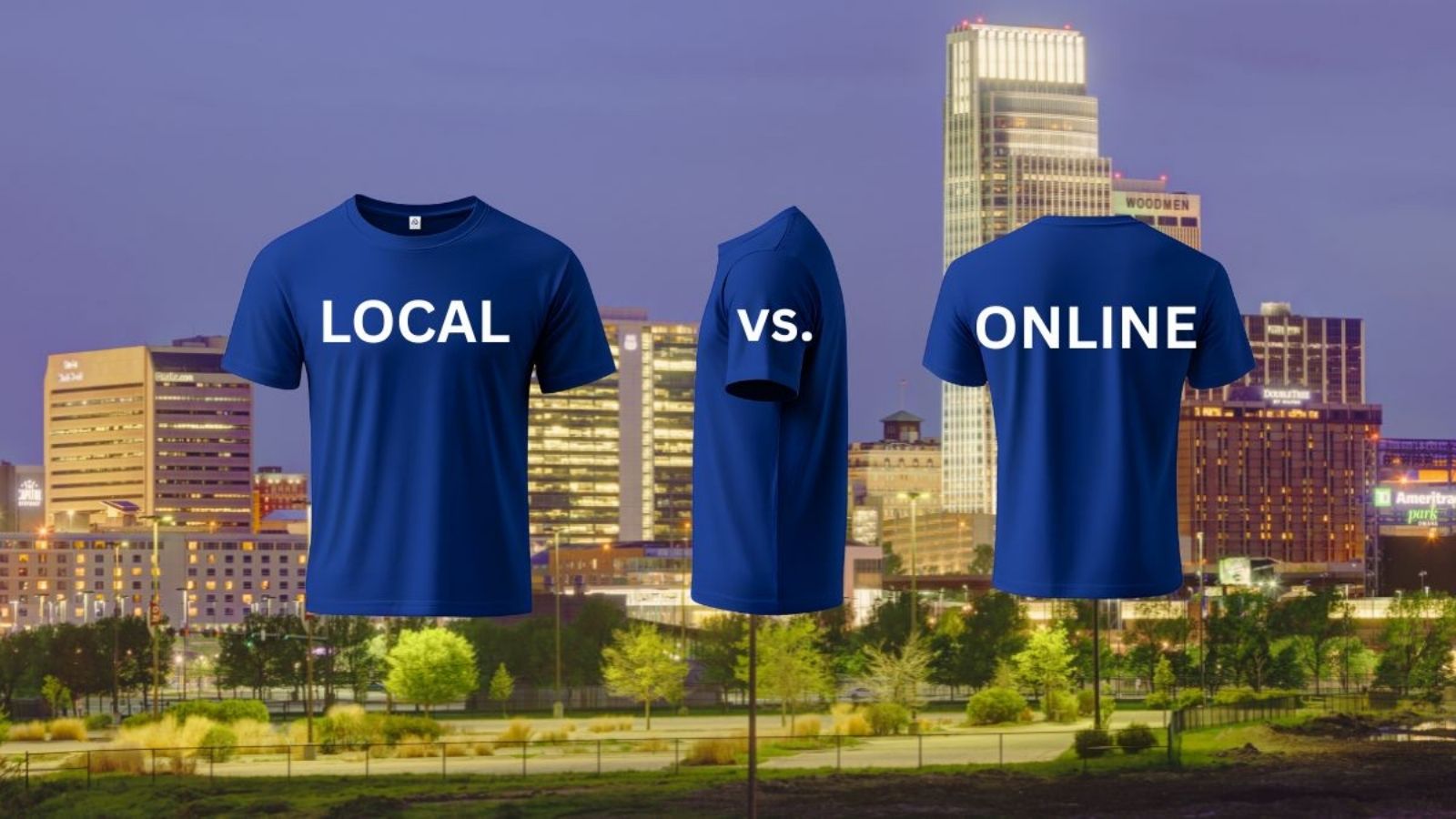
Local apparel printing is often preferred when apparel needs to look professional, last longer, and arrive on schedule. Choosing a nearby print provider can result in better fabric selection, clearer prints, and more dependable delivery compared with many online options.
For organizations focused on quality, fit, and timing, local apparel printing frequently delivers stronger long-term value than ordering online.
This comparison of local apparel printing vs. online ordering outlines how local shops and online platforms differ in customization, customer support, cost structure, and environmental impact. It helps clarify which option aligns best with budget, timeline, and brand goals.
Local Apparel Printing vs Online Ordering: Key Differences Explained
Direct Comparison: Local Apparel Printing vs Online Ordering
Local apparel printing and online ordering differ in how projects move from request to completion. Learn about practical trade-offs, including ease of ordering, production speed, quality checks, and how total costs are calculated.
Convenience and Accessibility
Local print shops provide in-person access to garments, inks, and equipment. Reviewing samples on-site allows decisions based on texture, weight, and finish, which supports high-quality output and fewer revisions. Discussions often happen beside the printing press, where staff can explain how designs behave across fabrics.
Online platforms emphasize convenience through digital storefronts and upload tools. Orders are placed using PDF files, processed in real-time, and tracked through automated systems. While efficient, this approach limits physical inspection and relies heavily on accurate file preparation.
Proofing formats also differ. Local providers may offer test pieces or soft proofs, while online services usually rely on screen-based previews.
Turnaround Time and Rush Orders
Production speed is a major differentiator. Local apparel printing frequently supports fast turnaround for small to mid-sized jobs when capacity allows. Local pickup reduces delays tied to shipping and distribution.
Online printers handle scale efficiently but depend on fixed production queues and carrier schedules. Shipping timelines can resemble long-distance moving, where multiple handoffs increase the chance of delays. For time-sensitive work, local apparel printing often provides clearer delivery windows and quicker adjustments.
Quality Control and Proofing
Hands-on inspection is a core strength of local apparel printing. In-house checks allow immediate adjustments to ink density, alignment, and color balance, supporting professional quality standards. Physical comparison helps manage RGB color translation and maintain vibrant colors or precise black and white output.
Online systems prioritize automation. Digital approvals move projects forward quickly, but issues embedded in files may go unnoticed until delivery. While consistent for simple jobs, complex designs benefit from the direct oversight found in local apparel printing.
Buyers who need precise color matching, specialty inks, or garment-specific advice benefit from a local printer’s hands-on quality control. For basic single-color logos or large standardized runs, reputable online printers can still deliver consistent quality.
Cost Factors and Hidden Fees
Online printers often show lower base pricing due to automated systems and bulk production. They also provide volume discounts and integrated shipping options, which can lower the total cost for large orders.
Local print shops may have higher per-unit prices on major runs but more flexible pricing for small batches and custom work. Hidden fees appear in both models: setup charges, art cleanup, rush fees, shipping, or minimum-order fees. Local printers sometimes waive setup or offer discounts to repeat customers, which offsets unit costs.
Customers should request a full quote that lists setup, proofing, rush fees, artwork charges, and shipping. Comparing final totals, not just per-shirt prices, reveals which option truly saves money for a given order size and timeline.
Customization, Support, and Sustainability Considerations
This section compares hands-on service, the range of printing methods and materials, how different order sizes affect brand consistency, and the environmental and local economic impacts of choosing local or online printing.
Personalized Service and Customer Support
Local printing companies let customers meet face to face, review fabric swatches, and inspect test prints before a full run. They often assign a single contact who tracks proofs, color matches, and delivery schedules. This direct line reduces errors and speeds fixes when a printing project needs last-minute changes.
Online printers rely on email, chat, or ticket systems and usually follow fixed workflows. Some offer phone support or live proofing tools, but resolving complex issues can take longer. For time-sensitive orders, local support is often faster; for straightforward, standardized orders, online support can be adequate.
Customization Options and Printing Techniques
Local shops typically offer a wider mix of printing techniques: screen printing for large solid areas, embroidery for logos, direct-to-garment (DTG) for full-color images, and specialty finishes like puff or foil. They let clients test techniques on different fabric weights and paper types, ensuring the final feel matches expectations.
Online printers provide many options, too, including print-on-demand for low volumes and DTG for photos. However, some specialty techniques or unusual paper weights for brochures and business cards may be limited. When a project needs a specific finish or material, confirm capability and request test samples from either provider.
Bulk Printing, Short Runs, and Brand Consistency
For large branded apparel runs, screen printing at a local facility can deliver lower unit cost and tighter color control across thousands of pieces. Local oversight helps ensure every shirt matches the approved Pantone, preserving brand consistency across sizes and batches.
Short runs and print-on-demand suit online printers and local shops that offer low-minimum orders. Online platforms excel at one-off or mixed-size orders, but color shifts between batches can occur. When brand consistency is critical, request color proofs, maintain the same printing technique, and use a trusted vendor, local or online, who will document settings and materials.
Environmental Impact and Local Economy
Local printing reduces shipping distances and often cuts the carbon footprint for delivery. Local shops may also accept fabric returns, recycle inks, or source responsibly made blanks, which helps lower environmental impact and supports local supply chains.
Online printers can offer sustainable options like organic fabrics and water-based inks, and print-on-demand reduces overstock waste. However, long-distance shipping and import logistics can increase emissions.
Buyers should ask local printing services and online providers about ink types and waste practices. They should also inquire about where the blanks come from. This will help them compare the real environmental costs.
Omaha Shirts & Retro Shirtz | Custom Design Tees inside Westroads Mall in Omaha, NE
We print Custom Shirts in full photo color, have no setup fees, and don’t charge for additional colors. The price you see is the price you pay for your completed shirts. And don’t worry about the cheap T-shirt Printing and design. We carry the highest quality Gildan brand shirts available.
Stop by any day of the week or contact us for a great Omaha Custom Shirts & T-Shirts, Nebraska, sweatshirt, or hoodie! Adult unisex, youth, baby, and women’s apparel is available.